
May 14, 2026 - 5:47pm UTC
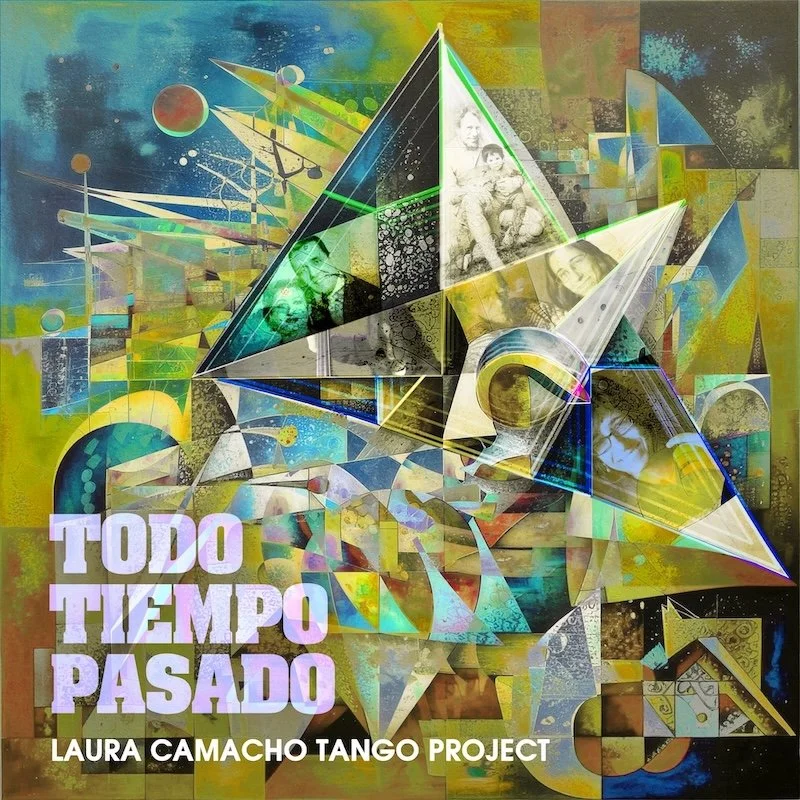
The new album by Laura Camacho Tango Project, Todo Tiempo Pasado, is now available! Celebrating the universality of music through the contemporary popular lens of the Argentine composer and double bassist, the album includes some of Camacho's favorite tangos, pop songs requested by milonga audiences, and recent original compositions.
Recorded in Buenos Aires and the United States with three different groups of collaborators, the album features Latin Grammy nominees Emiliano Messiez and Ariel Pirotti. It includes Camacho's own compositions, Todo Tiempo Pasado and ECOS, as well as works by Astor Piazzolla, Mariano Mores, and Pirotti. Listeners can enjoy a solo double bass feature on Milonga Triste, and tango versions of pop classics such as Britney Spears' Toxic and Kate Bush's Running Up That Hill (A Deal with God), exploring how tango continues to evolve and reach new audiences.
Born in Buenos Aires, Laura Camacho began her musical life dancing tango with her grandmother in the emblematic San Telmo neighborhood. She studied at the Conservatorio Manuel de Falla and with several double bass teachers, including tango bassist Horacio Cabarcos. For more than a decade she performed in classical, tango, and Baroque circuits, and taught double bass in youth orchestras in Buenos Aires.
In 2009 she moved to the United States on a university scholarship to continue her studies. While living in Athens, Georgia, she founded the Athens Tango Project. She later moved to Austin, Texas, to pursue a PhD in ethnomusicology at The University of Texas at Austin. Her research focuses on young Argentine tango communities (as both music and dance), the adaptation of the genre between Argentina and the rest of the Americas including the U.S., and the role of women in these tango communities.
Camacho composes for theater, directs ensembles, has toured internationally, and has collaborated with 2025 Latin Grammy winners Tanghetto, as well as with Béla Fleck, Julián Peralta, Pablo Agri, Horacio Romo, and Emiliano Messiez, among others.
You can listen to the album at the following links:
Bandcamp: https://lauracamachotangoproject.bandcamp.com/album/todo-tiempo-pasado
Spotify: https://open.spotify.com/album/41t8dvUh0kWZNx8q5gUZ0Q
Apple Music: https://music.apple.com/us/album/todo-tiempo-pasado-feat-laura-camacho/1847078854
YouTube: https://www.youtube.com/playlist?list=OLAK5uy_mhSRLdK9znaf3LQQShw2bfrQ-yHfa7Eas
Official website: https://www.athenstangoproject.com
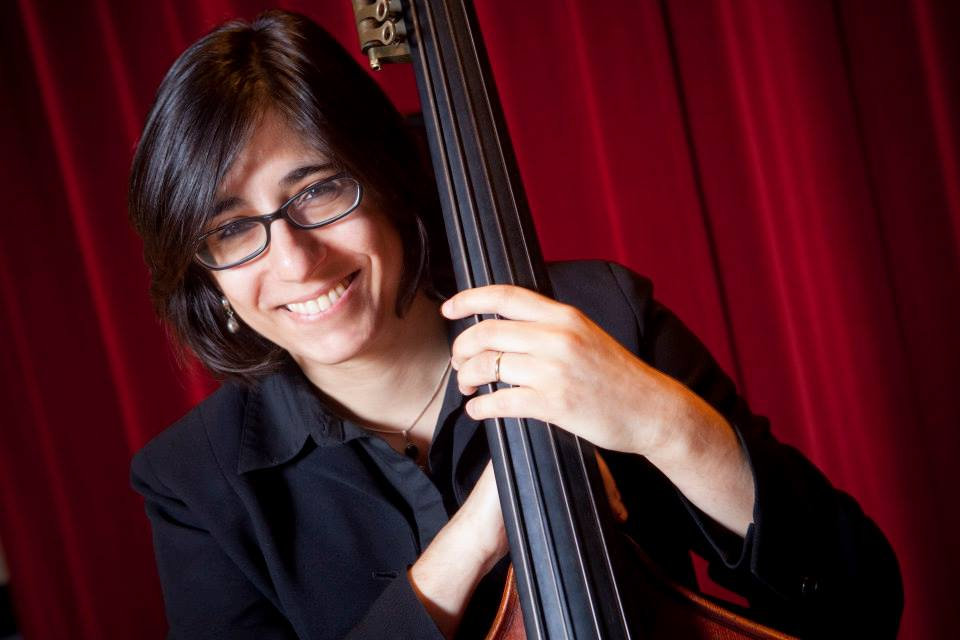
The ROOTS MUSIC REPORT interviews LAURA CAMACHO:
RMR: On background and the bass in tango: Can you tell us where you grew up and how you came to the double bass as your instrument? The bass is not often the lead voice in tango — how did you find your way to putting it so prominently at the center of your sound?
Laura Camacho: I was born in Buenos Aires, Argentina in the barrio called San Telmo. As a kid I spent many weekends with my grandmother, Lala, who was an avid tango dancer. We would listen to tango LPs together, and she would equalize the record player to tune down the excessive treble frequencies. She instructed me to increase the bass and showed me how to dance. When I became a teenager, I realized I wanted to be a bassist because it was my favorite part of any music I listened to or played. The Conservatory Manuel de Falla had a symphony double bass instructor who encouraged me and gave me freedom. I think I had to use it prominently when I founded the Athens Tango Project in Athens Georgia because nobody knew how tango music was supposed to be performed. It is my main instrument, and I was directing other musicians, so I learned to command with the bass.
RMR: On the album title and concept: Todo Tiempo Pasado translates roughly as "All Past Time." Does the title reflect a personal nostalgia, or is it more of a philosophical statement about tango's relationship with its own history? And do you see the album as a conversation between past and present?
Laura Camacho: The title track started as an exercise I created for myself with the goal of understanding the masterful simplicity of some tango classics my grandmother loved. I had Juan D’Arienzo as an inspiration, but as I started writing, other influences like Anibal Troilo also surfaced. Compositions take a life of their own, and once you are writing a piece you enter a dimension of pure exploration. You don’t know exactly where you are going, but you will not stop until you reach your destination. Since this tango was inspired by my afternoons in San Telmo with my abuela and given that it is stylistically different from my previous compositions, the name came to me. Most of the names come to me the moment I’m done writing a piece. In Argentina we have a saying “Todo tiempo passado fue mejor” (“ all past time was better”)
In this case I leave the ending open to interpretation. It works also as an album opener, not that I planned it, but it works in that imaginary, ambiguous timeline of the album.
RMR: On the pop reimaginings: The tango arrangements of Britney Spears' "Toxic" and Kate Bush's "Running Up That Hill" are unexpected choices. How did those songs come to be on the album, and what drew you to the milonga rhythm specifically for the Kate Bush track?
Laura Camacho: A tango dance instructor asked me to make tango versions of pop music to build a musical bridge to some of his students in the Atlanta area. He asked the right person because I had already developed tango covers of some rock and pop songs I liked, especially Athens bands. Toxic came as a natural hit begging to be made into a tango, and Kate Bush’s music I’ve enjoyed for years. This track had meaningful lyrics, was popular again, and the milonga connection was proposed by violinist Sergio Reyes, who plays in the album. Since I had already applied this approach of turning pop hits into milongas, we went all in with the idea. The result is a fun musical experiment that connects Kate Bush fans with tango fans in a new third musical space where nobody knows all the rules and nobody owns the ball, but most people think it’s a cool piece that is difficult to label.
RMR: On "Milonga Triste" and the collaboration with Osvaldo Tubino: "Milonga Triste" is one of the most intimate moments on the record, with just classical guitar and bass. How did that stripped-down arrangement come about, and what does Osvaldo Tubino bring to your music?
Laura Camacho: Osvaldo and I go back over twenty years, wow! I always liked his arrangements for the all-female tango group Las del Abasto when we both worked in the ensemble. I asked him to write an arrangement we could record together and suggested Milonga Triste, which he liked too. We incorporated his bandoneon player from one of his current projects, and I am very pleased with their work. Osvaldo was kind enough to write a solo for me to play on bass, which is funny because everyone tells me since the dawn of time that I don’t write solos for myself , haha, so I guess it works out when others sneak a solo in there, and then I have to record it!
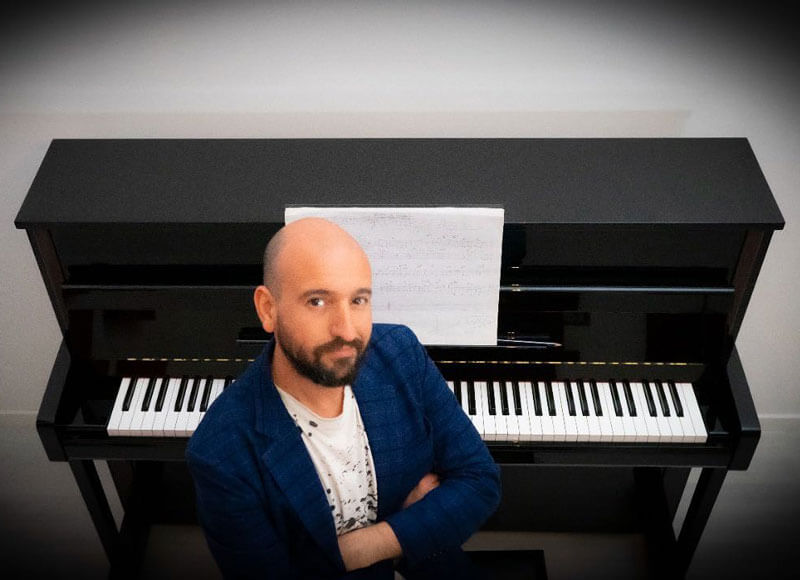
RMR: On Emiliano Messiez and Ariel Pirotti: Both Emiliano Messiez and Ariel Pirotti are Latin GRAMMY nominees and important collaborators on this album. How did those relationships develop, and can you say something about what each of them contributed — particularly Messiez's arrangement of "Toxic" and Pirotti's composition "Tifón"?
Laura Camacho: I met both at different periods of my life, Ariel we had collaborated decades ago, and then met again when I took an online class Ariel was teaching in 2022. Later that year I met Emiliano at a tango festival we were both playing. Emiliano and I both liked each other performances, ended up performing a piece together with others, and agreed to work together in the future. Both pianists are tasteful, easy to work with, and efficient when it comes to rehearsing once and recording several pieces in one afternoon. Emiliano did a wonderful job with Toxic, in hiding the theme in plain sight (or ear). Ariel Pirotti has beautiful, subtle compositions, and when looking for material for the album I proposed to him that we record Tifón since it is one of my favorites. I am really glad both of them are in my album because they add so much to it.
RMR: On academia and artistry: You are pursuing a Ph.D. in ethnomusicology at the University of Texas while maintaining an active performing and recording career. Does your research into tango communities directly influence how you make music, or do you keep those two worlds separate?
Laura Camacho: I would not say it directly influences my music making but I find myself listening to musical genres I may not have listened to so closely if it wasn’t for my academic role. I have connected with more musicians, and I am approaching music with deeper awareness of how it functions as an agent for representation and negotiations of space and power. It is a fun adventure to be on both sides!
RMR: On tango and dance floors: Tango is inseparable from the milonga dance floor. When you are arranging and recording, are you thinking about dancers as your audience, or purely about the listening experience?
Laura Camacho: Tango music and dance are two parts of the same art, but there is tango canción (tango song) and other forms of tango that do not involve the dance floor. I think of the dancers when writing or arranging a tango for the dancefloor, that is the priority. On the other hand, if I’m directing an ensemble for a concert hall, priorities will change, I will take more musical liberties, and work on a different type of musical experience.
RMR: On being a woman in tango: Your research focuses partly on the role of women in tango communities. Has your experience as a female bassist and bandleader in what has traditionally been a male-dominated genre shaped the music you make or the stories you want to tell?
Laura Camacho: The music I write occupies a real physical space but also lives in an alternative realm where beauty and form dictate their own rules. Music has agency of its own, in a way. My stories, on the other hand, are personal, and as the first woman to lead an orquesta tipica de tango Argentino named after herself in the USA (Orquesta Tipica Laura Camahco), I have encountered a good amount of opposition. It takes confidence and a lot of work to dance while conducting an ensemble. It looks natural and hard to believe it had not been done before I started doing it because it seems so natural, right? I was doing this dance in rehearsals for years, and when I moved to Texas I wanted to reach my goals faster, so I tried it live and it was a hit with musicians, dancers, and audiences in general, so I will continue to conduct this way, which is another first in the history of the genre. D’Arienzo used his arms, but I use my whole body, which gives more sources of information to the musicians who follow my moves. In all honesty, it is part of who I am, if you know me you know I can’t stop moving, especially when playing or conducting music, so I may as well put all my energy to good use!